
Berrien Projected vs Actual Release
A projected date is a planning estimate produced from the sentence, credit already earned, and the rules that currently apply. An actual release date records the custody change after it occurs. The two may differ. A pending detainer, court order, disciplinary event, transfer, or parole review can move the expected date or prevent release to the community.
Pretrial detention works differently. A person held at Berrien County Jail while a case is pending has no sentence-based release date. Bond may be set, changed, posted, or denied, and the court can issue a new order. A bond amount on the roster is not proof that release occurred. The jail record confirms the time custody ended, while Magistrate or Superior Court records explain the order.
Find Berrien Projected Releases
The correct search depends on where the person is held. Berrien OffenderIndex is a county booking and jail-status tool. The GDC offender search covers state-prison offenders and state sentences. The Parole Board holds TPM information. Federal and immigration custody require BOP or ICE records instead.
- Confirm identity with full name, inmate ID, GDC ID, booking date, or court case number.
- For Berrien County Jail, call 229-686-7664 and compare the roster detail with the sentencing or bond order.
- For a state prisoner, review GDC custody, sentence, conviction, and release-related fields, then verify important details in writing.
- Check the Parole Board TPM lookup only when parole consideration applies.
- Recheck the court and any detainer source before treating the date as community release.
The Berrien County released inmate record path helps distinguish a true release from a transfer. GDC itself warns that its public data may be incomplete and asks users to seek written confirmation from Inmate Records and Information.
Berrien County Jail Earned Time
Georgia does not use one simple good-time formula for every Berrien County inmate. O.C.G.A. Section 42-4-7 authorizes a sheriff or county custodian to award earned-time allowances to certain county inmates based on institutional behavior. The allowance generally may not exceed one-half of the confinement imposed, and the law includes work-detail credit and exclusions. The actual local calculation is not published in the reviewed Berrien sources.
County earned time is separate from GDC Performance Incentive Credit and parole. It also cannot create a date for a pretrial detainee who has not been sentenced. Ask the Berrien jail for the release computation and the clerk for the controlling sentence. If the two appear inconsistent, request the underlying records rather than estimating from arrest and sentence dates.
The successful manifest capture from the county earned-time statute shows the authority and limits behind this local calculation.
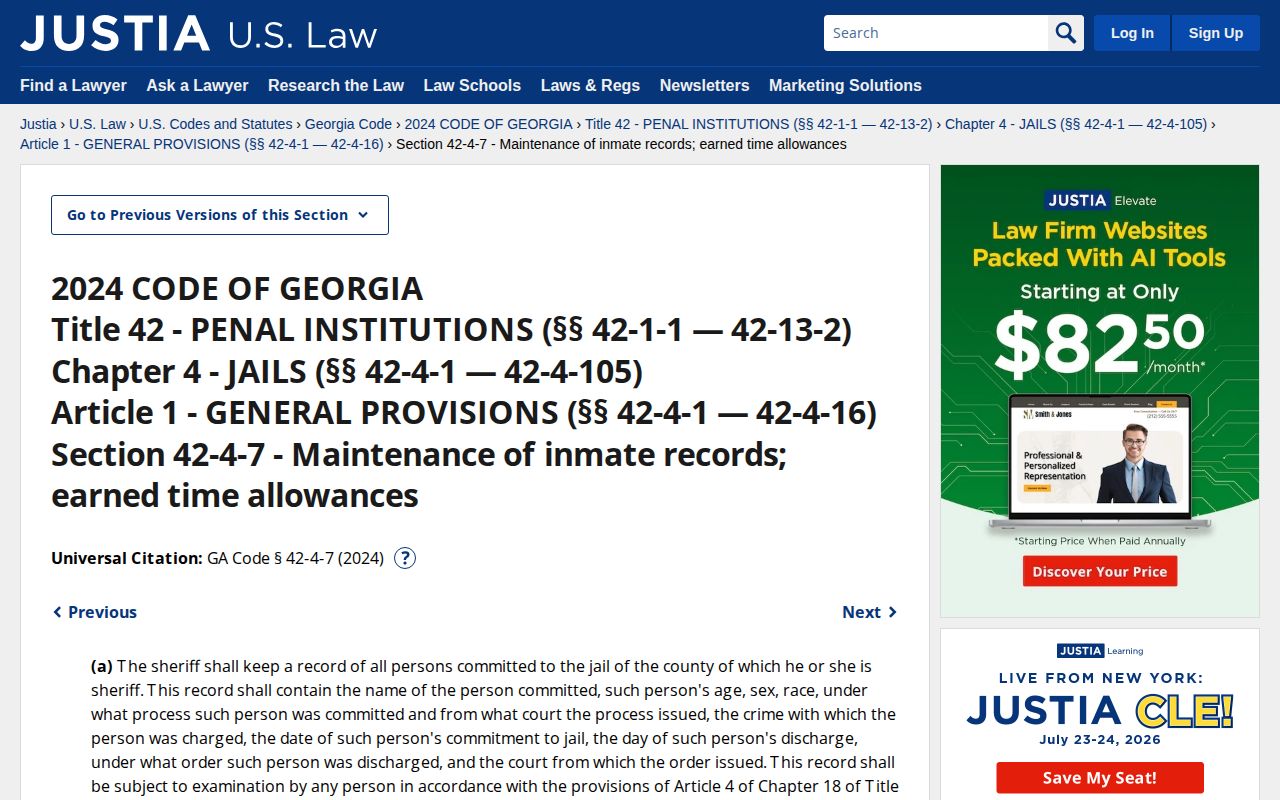
It supports asking the jail for the applied credit instead of assuming a fixed statewide percentage.
GDC Credit Changes Berrien Release
For eligible state prisoners, GDC's Performance Incentive Credit program can alter a TPM or maximum release date. PIC rewards satisfactory progress in education, work, treatment, vocational programs, and conduct. An eligible offender may build up to twelve points and potentially receive one to twelve months off a TPM or maximum date.
Eligibility has limits. GDC excludes categories such as death sentences, terms of two years or less, life sentences, and non-parole-eligible or minimum-mandatory cases. PIC is not county jail good time. It also does not turn a TPM into a final parole grant. Program progress and conduct remain part of the review.
The official GDC PIC page is captured in the matching release-date image.
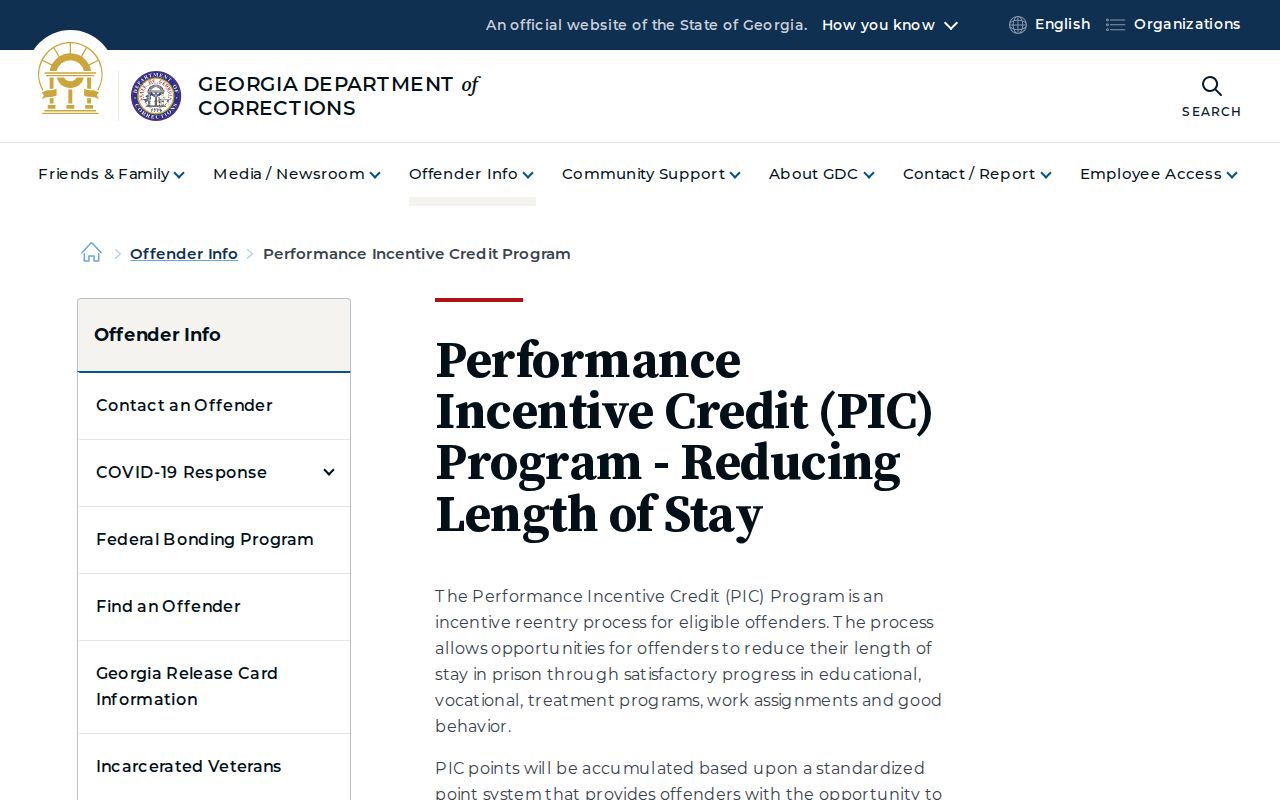
The program page identifies both the possible adjustment and the groups excluded from consideration.
Why Berrien Release Dates Change
A date can move in either direction, or the person may leave one agency without entering the community. Each cause belongs to a different custodian, so the last updated agency should be identified before drawing a conclusion.
| Change | Effect | Confirm with |
|---|---|---|
| Amended sentence or jail credit | Changes the legal term or starting computation | Berrien court and jail |
| Bond posted or changed | May permit pretrial release | Court and jail release record |
| Earned credit gained or lost | Moves county or state calculation | Jail or GDC |
| TPM postponed or canceled | Delays possible parole release | Parole Board |
| Detainer or transfer | Ends one custody but begins another | Receiving county, GDC, BOP, or ICE |
| Program condition | Delays release until completion | GDC and Parole Board |
A transfer is especially easy to misread. Disappearance from the Berrien current roster may mean movement to state, federal, immigration, or another county custody. The release date from one jail is not always a free-community date.
Confirm Berrien Actual Release
Use the Berrien jail record for county custody, GDC for state custody, and the Parole Board for parole decisions. DCS confirms post-release supervision, not the original jail release. Georgia VINE can send a custody-change alert when the participating agency reports it, but an alert is not a certified date or release reason. The local VINELink inmate search describes registration and feed limits.
For a county record, ask the sheriff for the booking sheet, release date and reason, bond or release paperwork, and any transfer record. For GDC, use its open-records portal when the public offender result is incomplete. Court records remain vital because they show the sentence, amendment, bond order, probation term, or revocation that caused the calculation to change.
Georgia Limits Early Berrien Release
Georgia's serious violent felony rule is stricter than a broad claim that everyone serves about eighty-five percent. O.C.G.A. Section 17-10-6.1 requires many covered sentences to be served in full without parole, earned time, work release, or other reductions, subject to narrow provisions. Non-life serious violent felony sentences for offenses committed on or after January 1, 1995 are listed by the Board as parole-ineligible.
Other state felony sentences may reach general parole eligibility under O.C.G.A. Section 42-9-45 after nine months or one-third of the term, whichever is greater, unless an exception controls. Eligibility is only the point at which consideration can occur. The Board notes that few prisoners receive parole at first eligibility.
A TPM follows Board review and may still depend on good conduct or program completion. The official TPM explanation appears in the successful manifest capture.
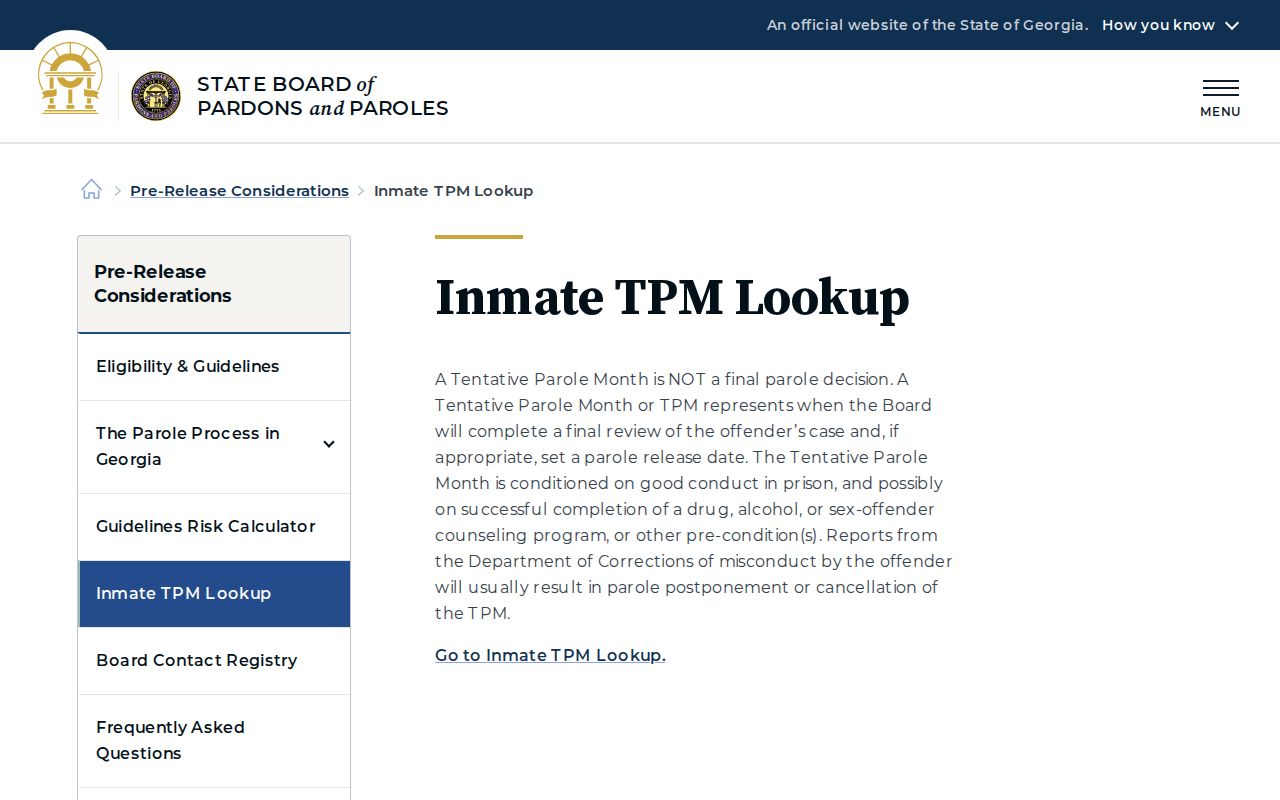
The source makes clear that the month is tentative and precedes a final release decision.
Build a Berrien Release Timeline
Start with the sentencing order and identify the term imposed, time already credited, offense category, and whether the person remains in county jail or entered GDC custody. A pretrial detainee usually has no sentence-based projected date. Bond, a new court order, dismissal, or transfer can end the local stay, so the court and jail must answer that question.
For a sentenced county inmate, ask Berrien County Jail for the confinement start date, credit recognized, any earned-time allowance actually awarded, and the resulting date. O.C.G.A. Section 42-4-7 authorizes certain county earned-time allowances based on institutional conduct, generally within statutory limits, and includes a separate work-detail credit provision. The statute grants authority but does not publish an individual calculation.
For a state prisoner, record the GDC identifiers, sentence dates, status, facility, and any maximum-release information shown. Check the Parole Board only when parole is legally available. Keep the Tentative Parole Month separate from the maximum date and from an actual release date.
Berrien Credit Systems Differ
County earned time, GDC Performance Incentive Credit, parole eligibility, and jail credit are not interchangeable. Jail credit recognizes time the sentencing court or custodian applies to the sentence. County earned time is awarded under county authority to qualifying inmates. PIC is a GDC incentive process for eligible state offenders. Parole eligibility marks when the Board may consider release.
| Release-date factor | Decision source | What to verify |
|---|---|---|
| Sentence and prior custody credit | Sentencing court and custodian | Order, start date, and credited days |
| County earned time | Sheriff or county custodian | Allowance actually awarded |
| GDC PIC | GDC and parole process | Eligibility, points, and applied adjustment |
| TPM | Parole Board | Tentative month and conditions |
| Maximum release | GDC sentence record | Current calculated date |
PIC can allow eligible offenders to earn up to twelve points and potentially reduce TPM or MRD by one to twelve months. Excluded groups include death-sentence offenders, sentences of two years or less, non-parole-eligible or minimum-mandatory offenses, and life sentences. A person being considered is not guaranteed a credit.
Check Berrien Holds Before Release
A calculated sentence date may not mean release to the community. Another warrant, county hold, GDC transfer, federal matter, or immigration detainer can change the next custody location. Berrien's sheriff reports immigration-related inquiries and DHS detainers in aggregate under HB 1105, which confirms the local relevance of hold and transfer questions without proving anything about a named person.
Ask the current custodian whether the date represents discharge, parole release, court release, or transfer. If the person moves into GDC, use the state offender record. If parole begins, use the parolee database and DCS Lakeland. BOP and ICE maintain separate federal systems. The actual departure record must come from the agency holding the person at that stage.
Record Each Berrien Date Source
Write down which agency supplied each date and when the record was checked. The sentencing date, parole-eligibility point, TPM, maximum release date, and actual discharge can all appear in one case without meaning the same thing. Keeping the source beside the date prevents a tentative month from being repeated as a guaranteed departure.
If two official records conflict, contact the agency responsible for the later stage. The sentencing court explains the imposed term and credit in its order. Berrien County Jail explains its local calculation and departure. GDC explains the state custody calculation, while the Parole Board explains TPM and its final parole action. A later hold may require confirmation from another custodian.
Recheck near the expected date. Misconduct, completed programs, applied credit, amended orders, or detainers can change the result after an earlier search. The actual release record remains the final evidence that custody ended.